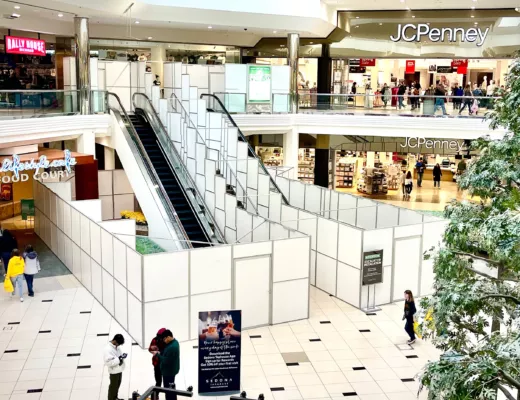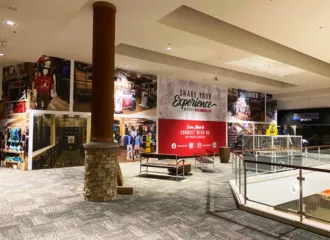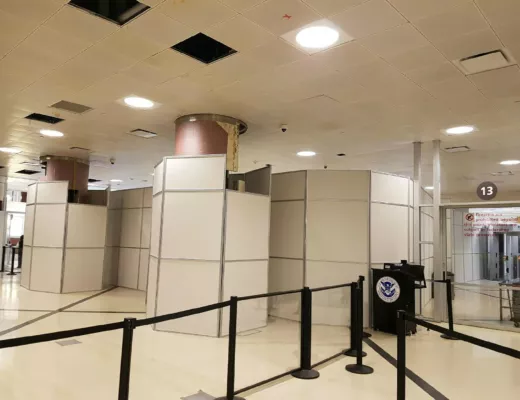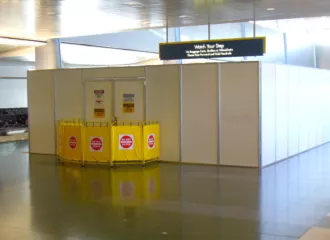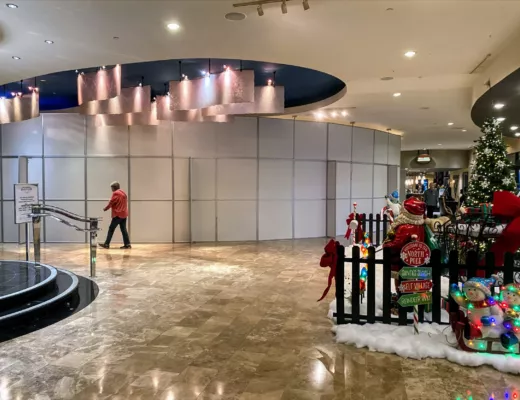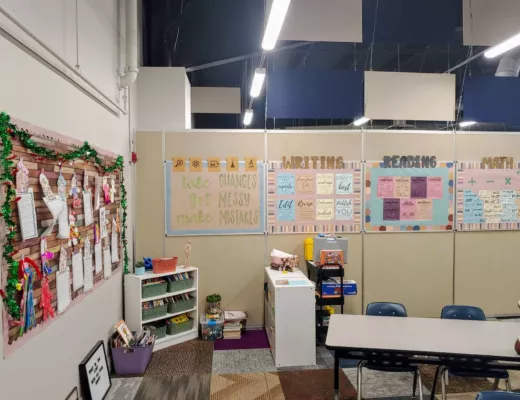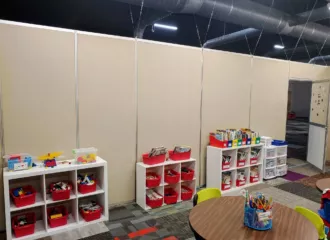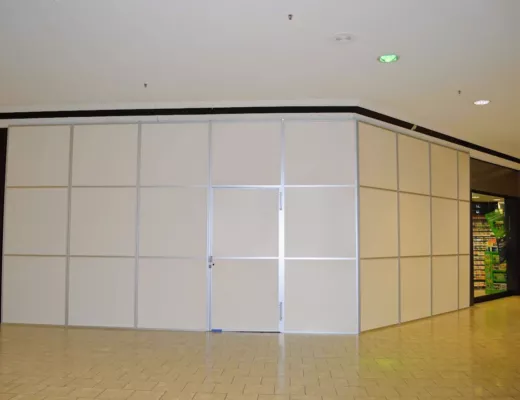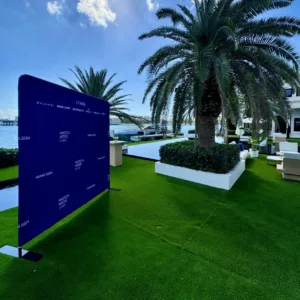
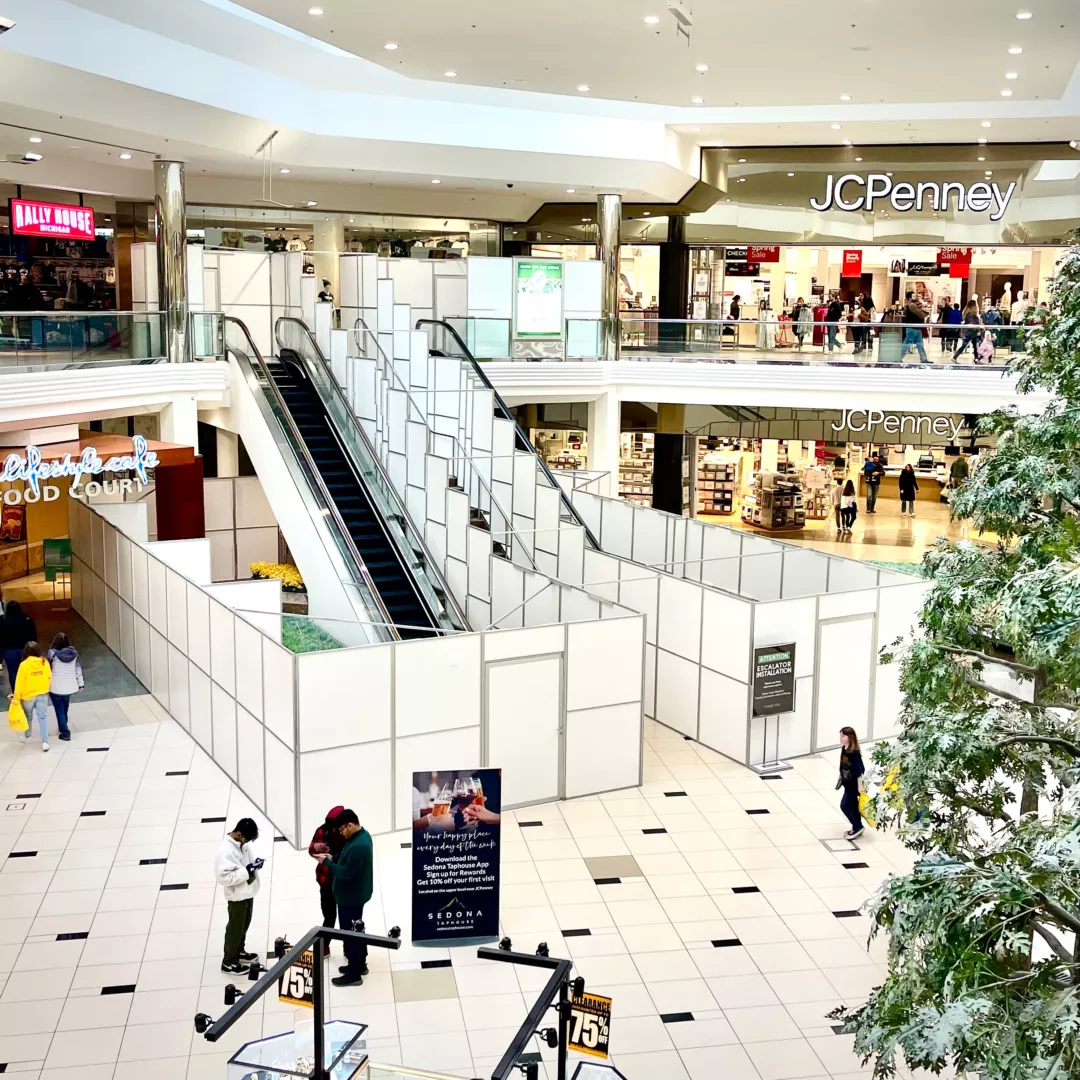
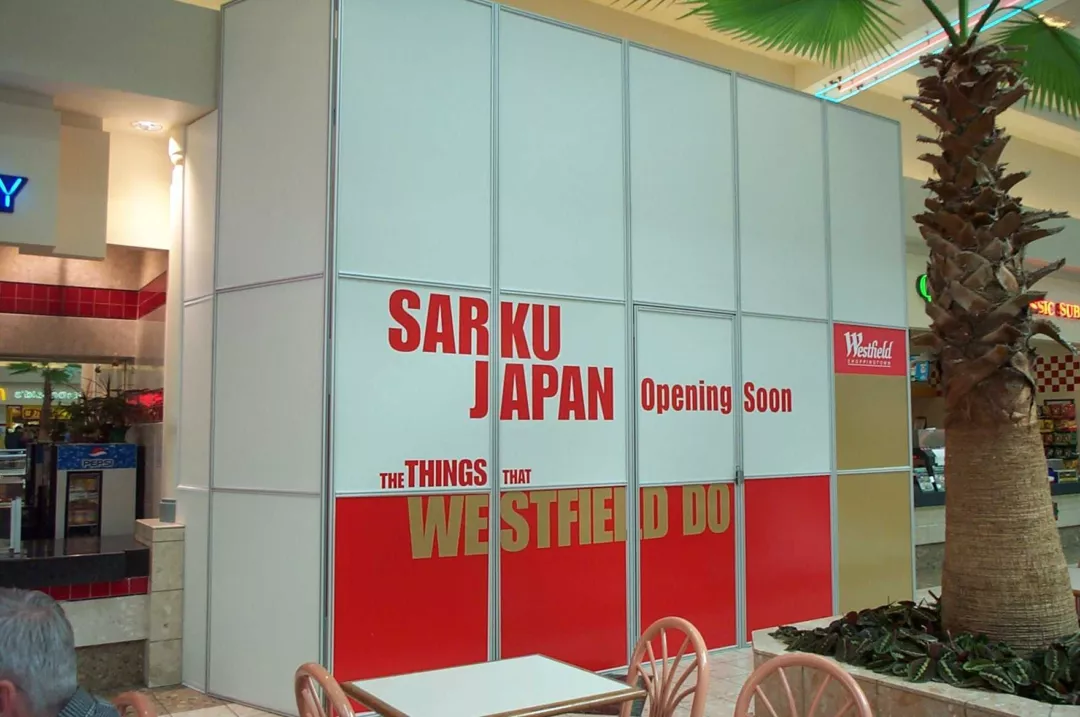



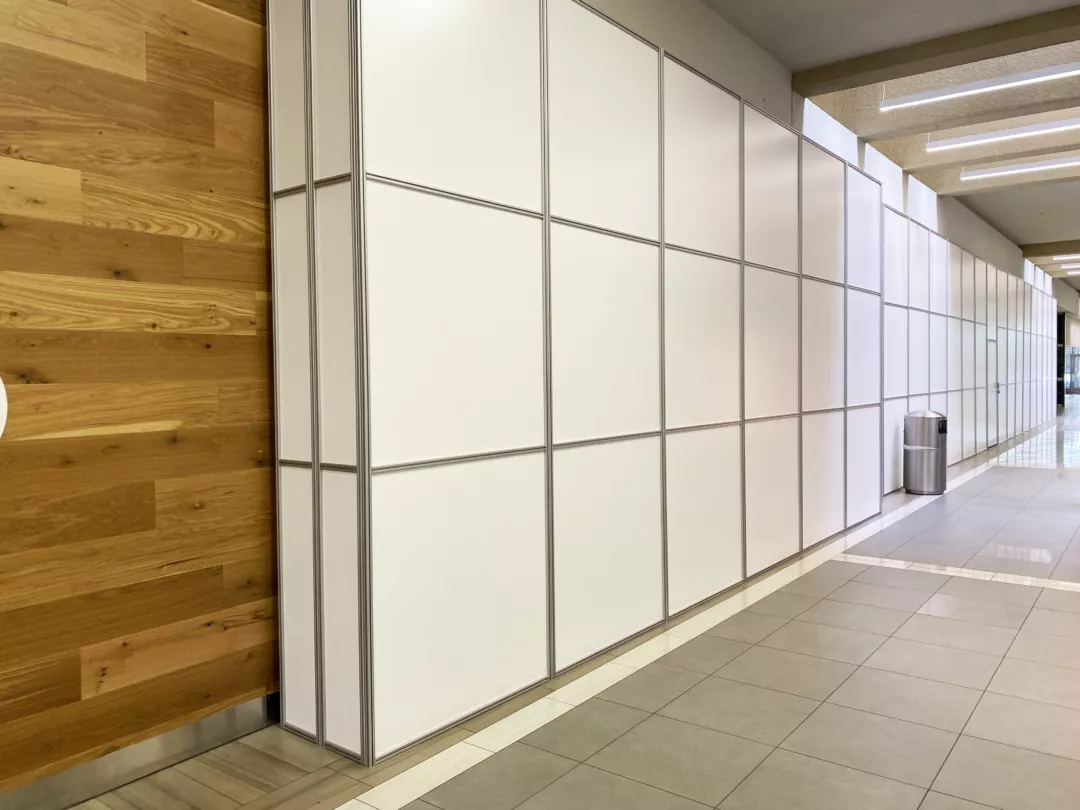
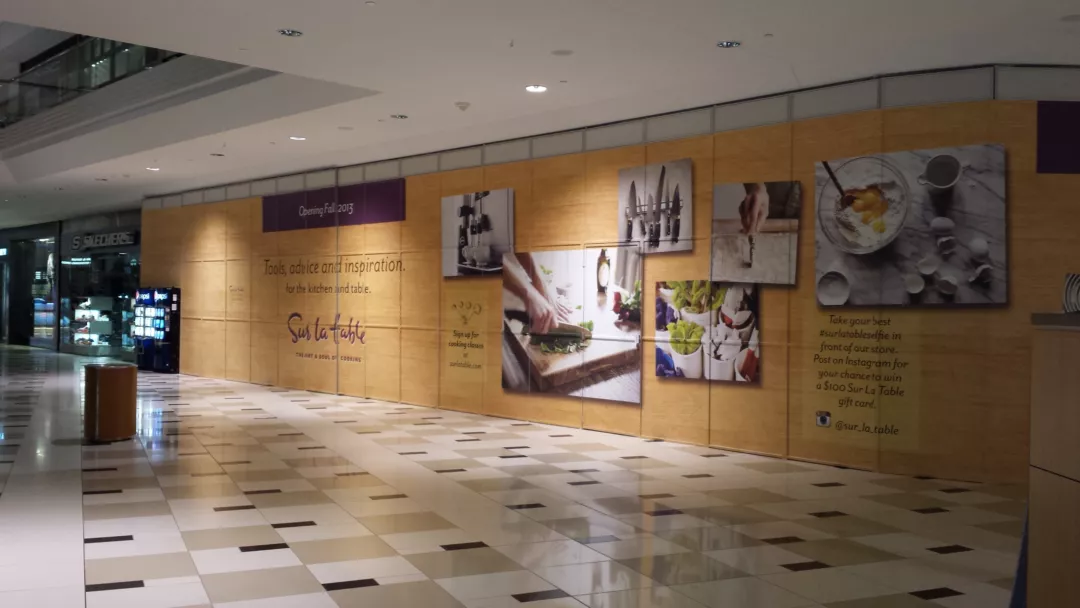
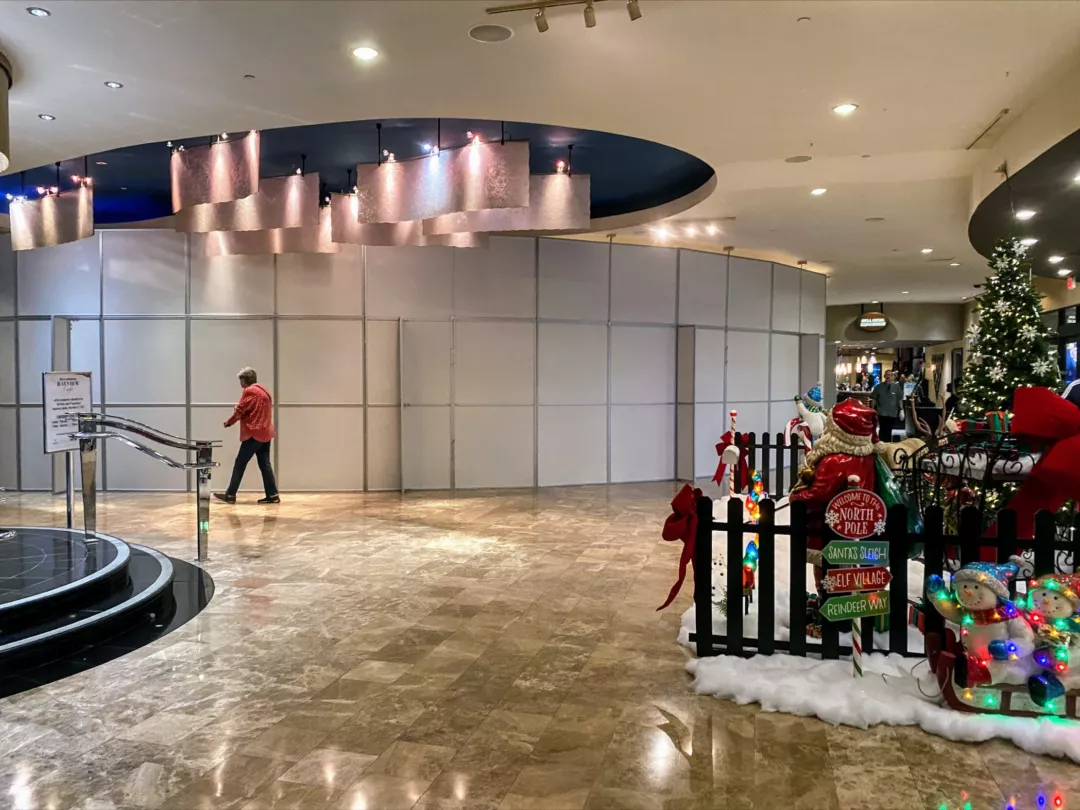


Temporary modular walls provide a flexible way to divide, enclose, or redefine commercial spaces without the mess and permanence of traditional construction. Britten's modular temporary wall systems use lightweight aluminum framing and modular panels that can be assembled, disassembled, and reconfigured as needs change. Available in 2-foot increments up to 16 feet, the system can adapt to several different layouts and applications.
Temporary walls can conceal construction, divide existing space, create pop-up environments, or establish defined areas within larger venues. Set apart from drywall with its redeployable and customizable design, temporary walls can conform to any location. Britten has used temporary modular walls in retail, airports, casinos, education, and more.
Can temporary walls be installed without drilling?
Britten's modular system is designed for assembly without attaching to floors or existing walls for it to function. Components are assembled using the system's hardware and can be reconfigured as needed.
How do you remove a temporary wall without damage?
The modular design allows temporary walls to be disassembled and reused. Because the system does not need to be attached to floors or walls to function, removal can avoid the demolition associated with permanent construction.
Do temporary walls need permits?
Permit requirements depend on the venue, location, and application. Britten can help coordinate the necessary permitting when required.
How do you install a temporary wall safely?
Follow the installation video below for detailed instructions on how to set up your temporary wall system. Britten's modular walls use lightweight aluminum framing and are designed for efficient assembly.
Why use a temporary wall instead of drywall?
Temporary walls can be assembled faster than drywall, reused for future layouts, and installed without the dust, painting, and waste associated with conventional construction.